

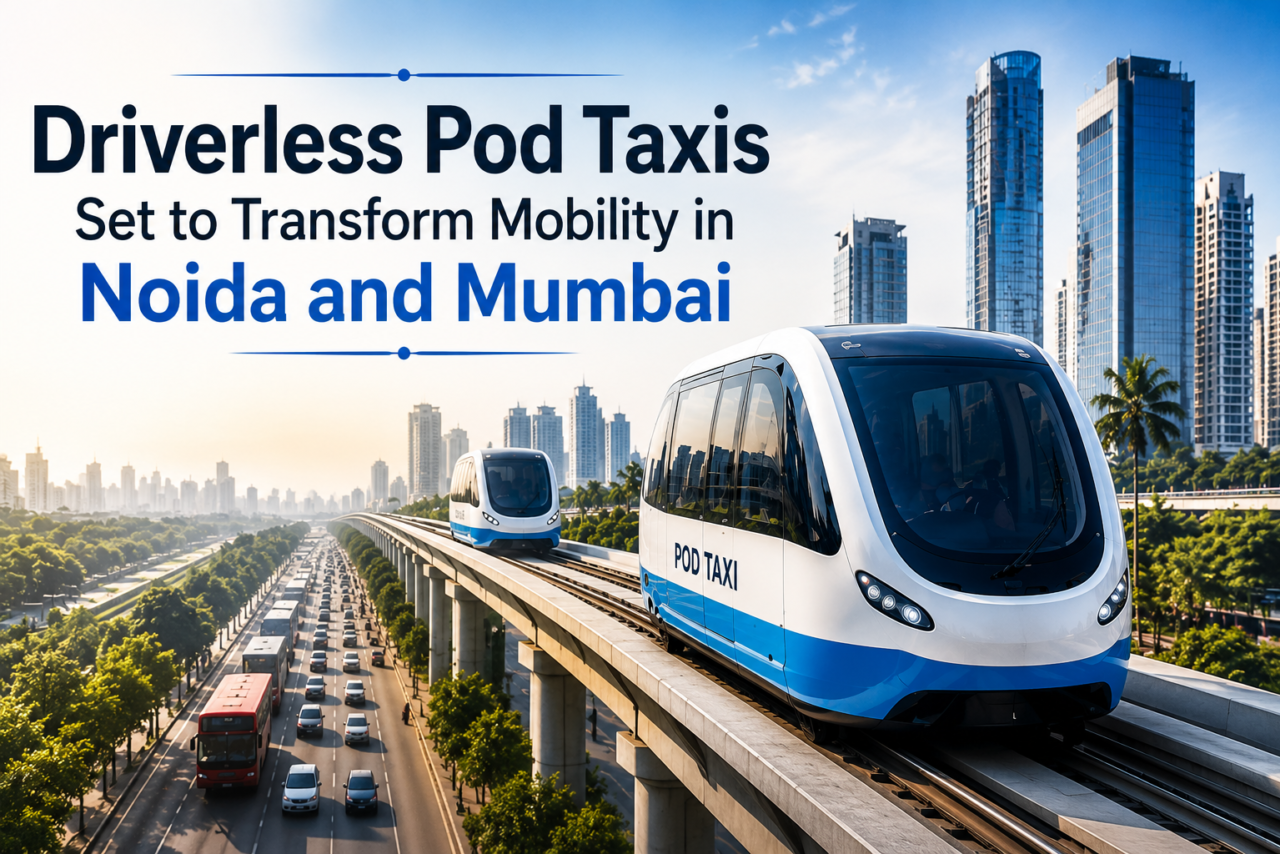

India is stepping into a new era of urban transportation, and driverless pod taxis are at the center of this transformation. As cities continue to grow and traffic congestion becomes a daily challenge, innovative mobility solutions are no longer a luxury—they are a necessity. Noida and Mumbai are among the first Indian cities preparing to embrace driverless pod taxi systems, promising faster, safer, and more efficient travel for residents.
These futuristic vehicles are expected to redefine the way people commute, offering a smart alternative to traditional road transport while supporting the country’s vision for sustainable urban development.
What Are Driverless Pod Taxis?
Driverless pod taxis, often referred to as Personal Rapid Transit (PRT) systems, are small automated vehicles designed to transport passengers on dedicated elevated tracks. Unlike conventional buses or trains that follow fixed schedules and routes, pod taxis operate on-demand.
Passengers can select their destination through a digital interface, and the pod takes them directly to their chosen stop without unnecessary halts. Since these vehicles are autonomous, they do not require a human driver, making operations more efficient and reducing travel delays caused by traffic congestion.
The concept has already been successfully implemented in several countries, and India is now exploring its potential to improve urban mobility in rapidly expanding metropolitan areas.
You Can Read Also:- Top Localities Near Noida Airport For Real Estate Investment in 2026?
Why Noida and Mumbai Need Smart Mobility Solutions
Both Noida and Mumbai face unique transportation challenges. Rapid urbanization, increasing population, and a growing number of private vehicles have placed significant pressure on existing transport infrastructure.
In Noida, the development of new residential sectors, commercial hubs, and industrial zones has led to higher commuter movement across the city. While metro connectivity has improved accessibility, last-mile transportation remains a challenge for many residents.
Mumbai, on the other hand, is one of the busiest cities in the world. Daily traffic jams, overcrowded public transport, and limited road space often result in lengthy travel times. Introducing pod taxis could provide a modern and efficient transport option that complements existing metro and railway networks.
How Pod Taxis Can Change Daily Commuting
One of the biggest advantages of driverless pod taxis is their ability to offer point-to-point connectivity. Unlike traditional public transportation systems, passengers do not have to wait for scheduled departures or make multiple transfers.
Imagine a resident traveling from a metro station to a residential township in Noida. Instead of searching for an auto-rickshaw or cab, they could simply board a pod taxi that takes them directly to their destination.
Similarly, in Mumbai, pod taxis could connect key business districts, railway stations, airports, and commercial centers, reducing travel time and enhancing commuter convenience.
This seamless travel experience has the potential to make urban transportation more predictable and stress-free.
You Can Read Also:- Top 5 Reasons to Buy a Home in Noida
Enhancing Sustainability and Reducing Pollution
Environmental sustainability is another major reason why pod taxis are gaining attention worldwide. Most pod taxi systems operate using electric power, which helps reduce carbon emissions compared to conventional fuel-powered vehicles.
Indian cities have been struggling with air pollution for years. Encouraging the use of clean and energy-efficient transportation systems can contribute significantly to improving urban air quality.
Additionally, dedicated pod taxi tracks can reduce dependency on private cars, resulting in fewer vehicles on the roads. This not only lowers emissions but also helps ease traffic congestion.
As India moves toward greener infrastructure and sustainable urban planning, pod taxis could play an important role in achieving environmental goals.
Improved Safety Through Automation
Road accidents remain a major concern across Indian cities. Human errors such as distracted driving, speeding, and traffic violations are among the leading causes of accidents.
Driverless pod taxis use advanced sensors, artificial intelligence, and automated control systems to navigate safely. Since these vehicles operate on dedicated guideways separated from regular traffic, the risk of collisions is significantly reduced.
Automated operations also ensure consistent speed management and real-time monitoring, creating a safer travel environment for passengers.
For families, students, senior citizens, and daily commuters, this enhanced level of safety can make pod taxis an attractive transportation option.
Boosting Real Estate Growth
The introduction of innovative transportation infrastructure often has a positive impact on real estate development. Areas with improved connectivity tend to attract homebuyers, investors, and businesses seeking better accessibility.
In Noida, pod taxi corridors could enhance connectivity between residential sectors, business parks, educational institutions, and metro stations. This may increase demand for properties located near these transit routes.
Similarly, improved mobility in Mumbai could boost commercial and residential developments in emerging growth corridors.
Developers are increasingly recognizing that modern transportation systems add value to urban communities. Better connectivity often translates into higher property appreciation and improved quality of life for residents.
Supporting Smart City Development
India’s Smart Cities Mission focuses on creating urban spaces that are technologically advanced, sustainable, and citizen-friendly. Driverless pod taxis align perfectly with these objectives.
By integrating autonomous transportation with digital infrastructure, cities can create a more connected and efficient mobility ecosystem. Features such as real-time tracking, digital ticketing, automated operations, and energy-efficient technology make pod taxis a strong addition to smart city initiatives.
As urban centers continue to expand, investing in intelligent transportation systems will be crucial for maintaining mobility and improving overall city management.
The Road Ahead
While driverless pod taxis are still in the planning and implementation stages, their potential impact on urban transportation is undeniable. Noida and Mumbai have the opportunity to become pioneers in adopting next-generation mobility solutions that can transform how people travel within cities.
The success of these projects will depend on careful planning, infrastructure development, regulatory approvals, and public acceptance. However, if executed effectively, pod taxis could become a game-changing addition to India’s transportation landscape.
Conclusion
Driverless pod taxis represent more than just a futuristic transport concept—they symbolize the future of smart urban mobility. By offering faster travel, reduced congestion, improved safety, and environmentally friendly operations, these autonomous vehicles have the potential to revolutionize commuting in Noida and Mumbai.
As India embraces innovation and smart infrastructure, pod taxis could soon become a familiar sight, helping create cities that are more connected, efficient, and sustainable for future generations.



Leave a Reply