

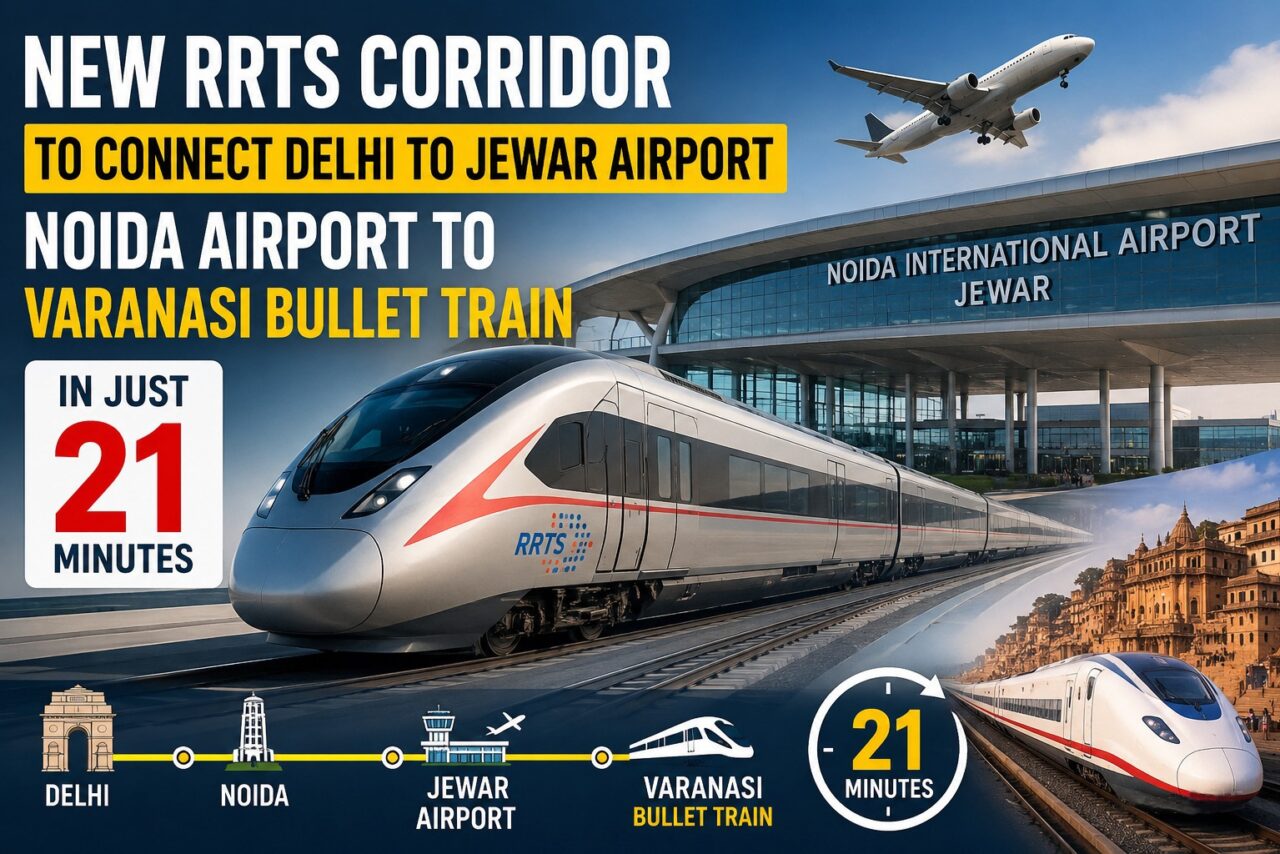

A major infrastructure development is set to transform travel across Delhi-NCR as plans move forward for a new Regional Rapid Transit System (RRTS) corridor connecting Delhi directly to the upcoming Noida International Airport at Jewar. Once operational, the high-speed rail corridor is expected to reduce travel time between Delhi and the airport to just 21 minutes, making airport connectivity faster and far more convenient for passengers.
The project is being seen as a game-changer for the entire NCR region, especially for Noida, Greater Noida, and the Yamuna Expressway belt. With Delhi’s growing population and increasing traffic congestion, the new rapid rail system is expected to offer a modern, efficient, and comfortable alternative to road travel.
At present, reaching Jewar Airport from Delhi can take well over an hour depending on traffic conditions. The proposed RRTS corridor aims to completely change that experience by introducing high-speed trains with seamless connectivity. Travelers heading to the airport for business trips, vacations, or international flights will be able to reach their destination in a fraction of the current travel time.
You Can Read Also:- Top Posh Areas in Greater Noida West for Luxury Living
What makes this project even more important is its planned integration with the Delhi–Varanasi bullet train corridor. This means the airport will not only be connected to Delhi but could also become an important transport hub linked to several major cities across Uttar Pradesh. The idea is to create a smooth and future-ready transport network that supports both regional and long-distance travel.
Infrastructure experts believe the corridor will play a huge role in accelerating development around Jewar and the Yamuna Expressway region. Over the last few years, this area has already attracted significant attention due to major projects like Noida International Airport, Film City, industrial hubs, and expressway expansion. Improved rail connectivity is likely to increase demand for residential and commercial properties even further.
Real estate developers and investors are already closely watching the project because better connectivity often leads to rapid urban growth. Areas near proposed stations may witness rising property prices, new housing projects, commercial centers, hotels, and business parks in the coming years.
Apart from improving travel convenience, the project is also expected to generate employment opportunities during both construction and operational phases. Industries related to logistics, aviation, hospitality, retail, and transportation are likely to benefit from the improved connectivity.
The proposed corridor reflects the government’s larger vision of building world-class transport infrastructure across India. Rapid rail systems are becoming increasingly important in urban planning because they help reduce pressure on roads, cut down travel time, and support environmentally sustainable transportation.
The success of the Delhi-Meerut RRTS corridor has already shown how modern rapid transit systems can improve daily commuting experiences. Authorities now aim to bring similar efficiency and speed to the Delhi-Jewar route, especially considering the importance of the upcoming international airport.
For frequent flyers and working professionals, the new corridor could become one of the most convenient travel options in NCR. Instead of dealing with long traffic jams and unpredictable travel times, passengers will have access to a faster and more reliable public transport system.
The development is also expected to strengthen the overall economic importance of the Noida-Greater Noida region. Better connectivity usually attracts businesses, multinational companies, startups, and new investments. As infrastructure improves, the region could emerge as one of North India’s biggest business and commercial hubs.
The Noida International Airport itself is considered one of India’s largest aviation projects. With modern transport systems connecting it to Delhi and other cities, the airport is expected to handle growing passenger traffic more efficiently in the future.
Overall, the proposed 21-minute RRTS connectivity between Delhi and Jewar Airport represents much more than just a transport project. It symbolizes the rapid transformation of NCR into a smarter, more connected, and future-focused urban region. As work progresses, the project is likely to bring long-term benefits for travelers, businesses, investors, and residents across the region.


Leave a Reply